In 2026, caring for others has become much easier and safer than before. The days of using paper files, thick folders, and messy spreadsheets are now over. Care teams, family members, and managers now use simple apps on their phones or tablets. These tools help everyone stay organized, keep people safe, and provide better daily care.
A good care planner app has become an essential tool in the healthcare industry. It is no longer just an extra option. It is now a must-have for high-quality and safe care. This guide explains everything in very simple and clear wordings. You will learn about the main features, real benefits, and honest user experiences in 2026.
What Is a Care Planner App?
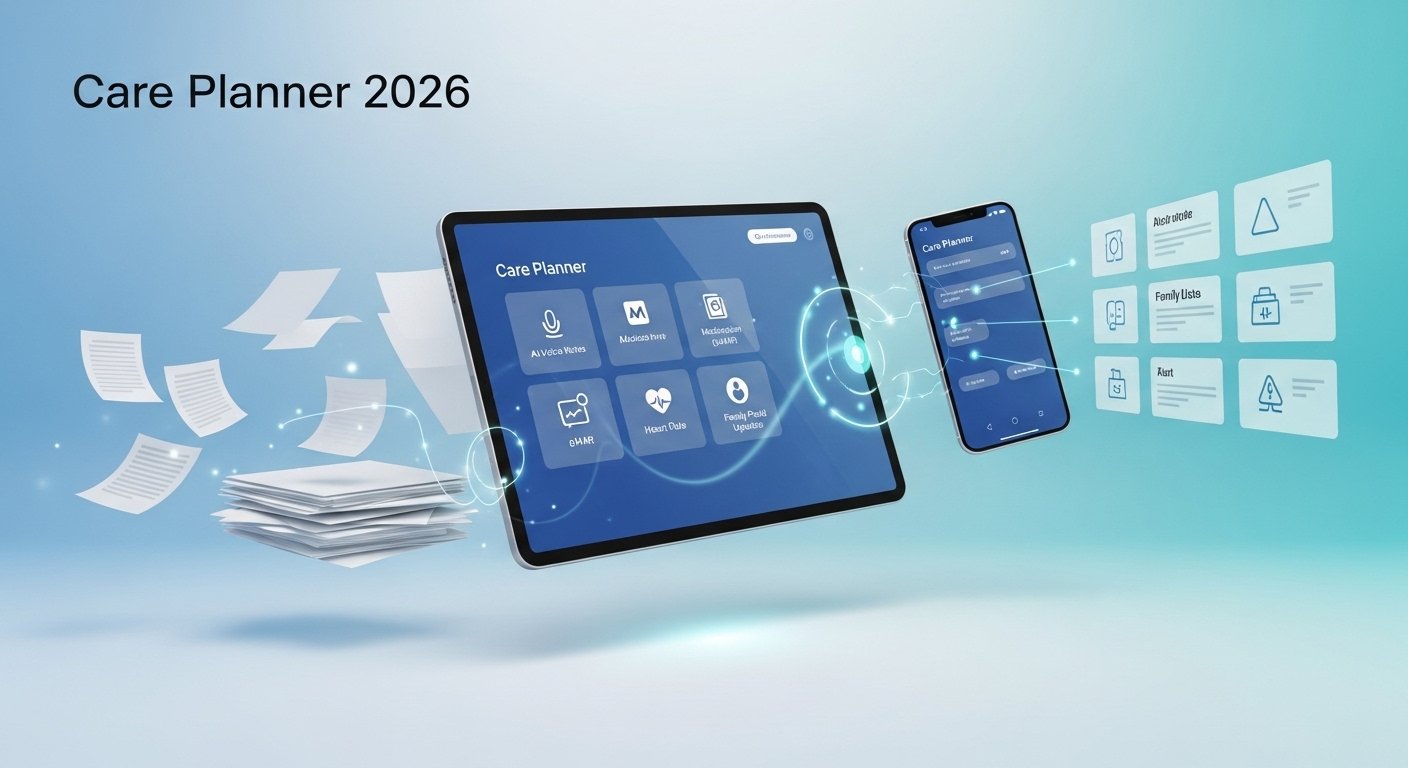
A care planner app is a digital platform that helps organize, track, and manage health and daily living tasks for people who need support. It works on mobile phones and tablets. The app connects everyone involved in care – the patient, doctors, professional caregivers, and family members.
Caregivers can open the app at the start of their shift and see exactly what needs to be done. They can record notes, track important health signs, and receive instant alerts. In 2026, these apps make care smoother, faster, and more personal for everyone.
Why Care Teams Moved to Digital Tools in 2026
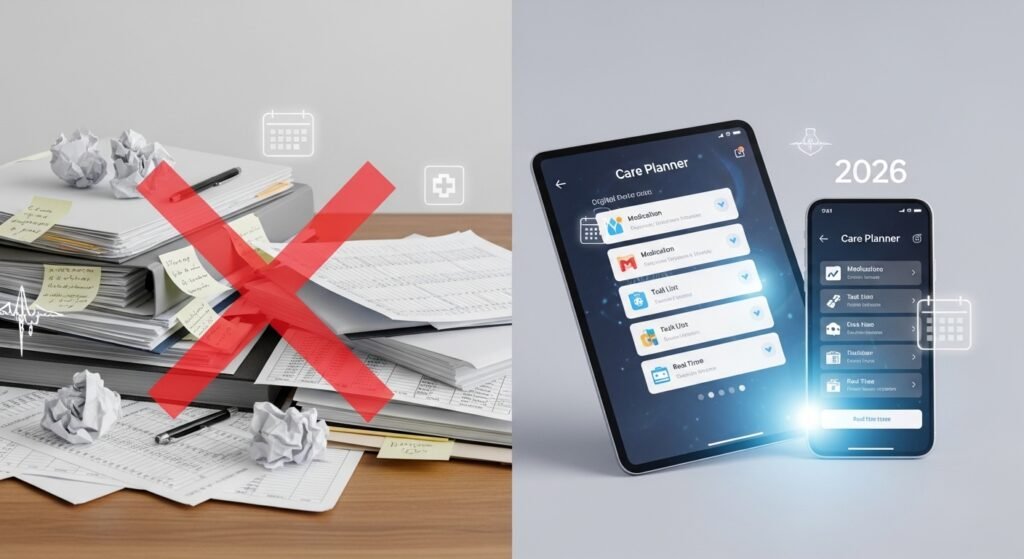
Paper records were slow and often caused problems. Important details could get lost or misread. Writing everything by hand took a lot of time, and this led to delays in care.
In 2026, more than 85 percent of healthcare providers have switched to digital care planning. The main reason is simple: speed and accuracy save lives. Digital systems help reduce mistakes by up to 30 percent compared to manual methods. Teams now spend less time on paperwork and more time actually caring for people. This change has improved communication, reduced errors, and made daily work much more efficient.
Key Features of Care Planner Apps in 2026
Modern care planner apps are much smarter than old calendar tools. Here are the most important features that make them so useful.
AI-Powered Smart Notes
Caregivers no longer need to spend long hours typing reports at the end of the day. They can simply speak into their phone. The artificial intelligence then turns the spoken words into clear, professional notes. The app can even notice changes in a patient’s mood and highlight them for the team. This feature saves a lot of time and keeps records accurate and complete.
Live Medication Tracking (eMAR)
Missing a medicine dose can be very dangerous. The electronic Medication Administration Record, or eMAR, sends loud alerts if a dose is late or forgotten. It also records exactly who gave the medicine and at what time. This creates a safe and clear record that helps protect both patients and caregivers during audits or legal checks.
Connection with Doctor Systems
Good apps now connect directly with doctor offices and health systems. When a doctor changes a prescription, the update appears in the care app right away. There is no more waiting for phone calls or paper updates. Care teams always have the latest and correct information.
Family Portals
Many family members feel worried when they live far from their loved ones. The family portal lets them log in and see simple daily updates. They can view what the person ate, what activities they enjoyed, and even see happy photos. This feature builds trust and reduces the number of worried phone calls to the care office.
Offline Mode
Care work does not always happen in places with good internet. Top apps work completely offline. Caregivers can enter all information during a visit in a remote home or basement. The app automatically syncs everything safely as soon as the phone gets a signal again. This is very helpful in rural areas and large buildings.
Other helpful tools include clear task lists, smooth shift handovers, lone worker safety alerts, and easy reports for official inspections.
Real Benefits for Everyone Involved
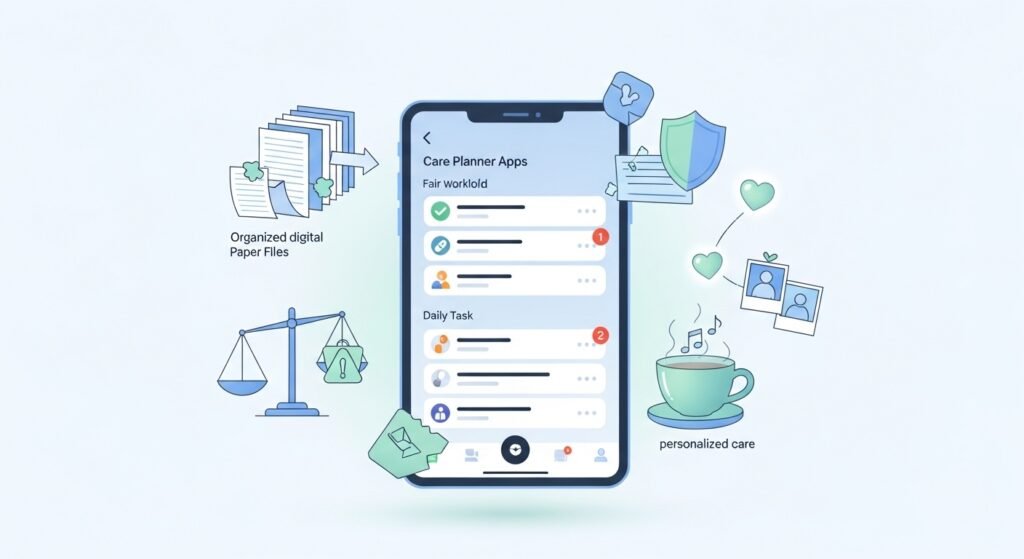
Care planner apps do not just look modern. They bring real, practical improvements to daily life.
Benefits for Managers and Agency Owners
When government inspectors visit, managers can show complete digital records in just a few seconds. There is no need to search through piles of paper. Many organizations save a large amount of money every year by reducing errors and staff admin time. The app also helps balance workloads fairly so staff do not get too tired or burned out.
Benefits for Caregivers
Caregivers feel much less stress when they know exactly what to do at the start of every shift. They can leave quick notes for the next person on duty. Safety features, such as emergency alerts if a lone worker does not check out, help protect caregivers who work alone. Overall, they spend more time giving personal care and less time on paperwork.
Benefits for Patients and Residents
The app remembers small personal details, such as how someone likes their tea or their favorite music. This makes care feel warmer and more like a friendship. If health signs change, the app sends quick alerts so nurses can respond fast. Many hospital visits are prevented because problems are caught early.
Benefits for Families
Living far away no longer means feeling disconnected. Regular updates and photos help family members feel involved and reassured. This peace of mind improves relationships between families and care teams.
Leading Care Planner Apps in 2026
Several strong apps lead the market in 2026. Each one has different strengths depending on your needs.
Access Care Planning works very well for home care agencies. It offers excellent AI voice notes and strong connections with doctor systems. Many teams like its flexibility and easy offline mode.
Birdie is a popular choice for home-based care. It is especially easy for families to use and provides clear real-time updates.
StoriiCare is a top option for care homes. It focuses on person-centered care, life stories, and meaningful daily activities. It also helps with family engagement.
Yardi Senior Living is best for large facilities. It combines care planning with billing and resident management in one complete system.
Epic Haiku and Canto are strong for hospital-to-home transitions because they handle detailed medical information very well.
What Real Users Say in 2026
Real people using these apps every day have shared honest feedback.
Sarah, a care manager in London, said: “Before the app, I spent four hours every day checking paper forms. Now I see everything on one dashboard in five minutes. It gave me my life back.”
James, a professional caregiver, explained: “I used to worry about forgetting medicines. Now the app will not let me finish a visit until I confirm every dose. I feel much safer in my job.”
Linda, a daughter caring for her mother from far away, shared: “I live three hours away, but I can see a photo of mom smiling at her gardening club. It makes my whole day better. I finally feel like I know she is okay.”
These kinds of stories appear again and again in user reviews from different countries.
How to Choose the Right Care Planner App
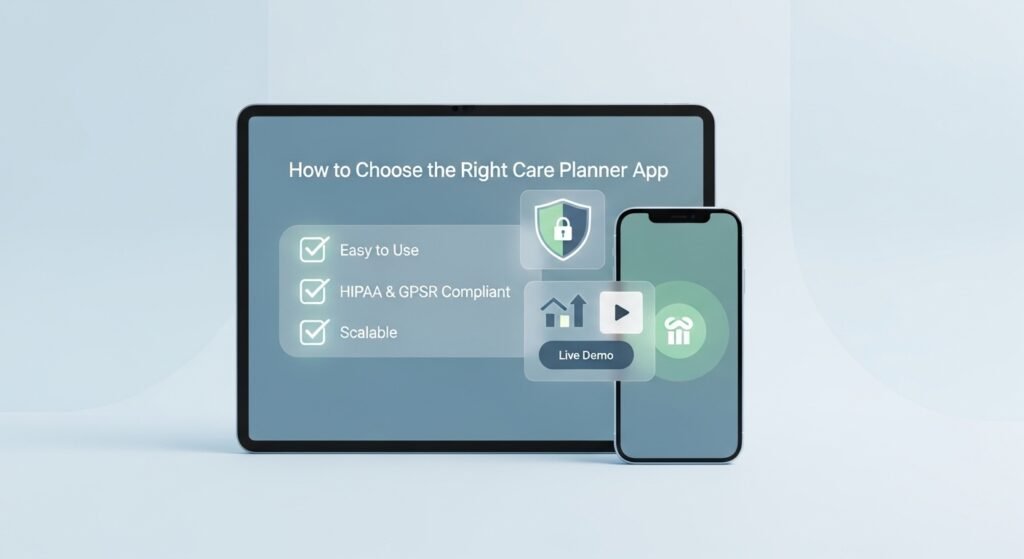
Choosing the best app is an important decision. Ask yourself these clear questions before you decide.
First, is the app easy to use? If it feels too complicated, staff and family members will not want to use it. The best apps feel as simple as WhatsApp or Facebook.
Second, does it follow local privacy laws? Make sure it meets standards such as HIPAA in the United States or GDPR in Europe. Good protection of personal health information is essential.
Third, can the app grow with your needs? You may start small today, but you need a system that can support more people later without problems.
Take time to watch live demonstrations and speak with current users. Many companies offer free trial periods so you can test before buying.
The Future of Care Planning in 2026 and Beyond
Care apps continue to become smarter. Predictive care features now study patterns and warn teams about possible risks. For example, the app may say there is a high chance a person might fall in the next two days. Caregivers can then take early action to prevent accidents.
Wearable devices such as smart watches also connect directly to the apps. If a patient’s heart rate rises suddenly at night, the app sends an automatic alert to the night staff. These new tools help care become more preventive while staying simple for daily users.
Final Thoughts
The care planner app in 2026 works like the heartbeat of modern care. It removes the heavy burden of paperwork and lets everyone focus on the person who needs support. Safer records, quicker communication, and personal attention become possible every single day. Moving to a good digital care system is one of the smartest choices any care provider or family can make this year. The right app saves time, reduces stress, improves safety, and creates happier outcomes for everyone.
Whether you manage a large care home or support one loved one at home, exploring these apps can bring real positive changes. Better tools lead to better care.
Disclaimer: This article is for general information and educational purposes only. It is not a promotional or affiliate article, and we have no connection or partnership with any care planner apps or companies mentioned. All details are based on publicly available information as of 2026 and may change over time. Images are used only for reference and illustration. This is not medical, legal, or professional advice. Please do your own research and consult qualified professionals before making any decisions. We are not responsible for any actions or outcomes resulting from reading this article.
Explore More:
Credas App (2026): Complete Guide to Identity Verification, Features, Pricing & Real User Insights
About the Author