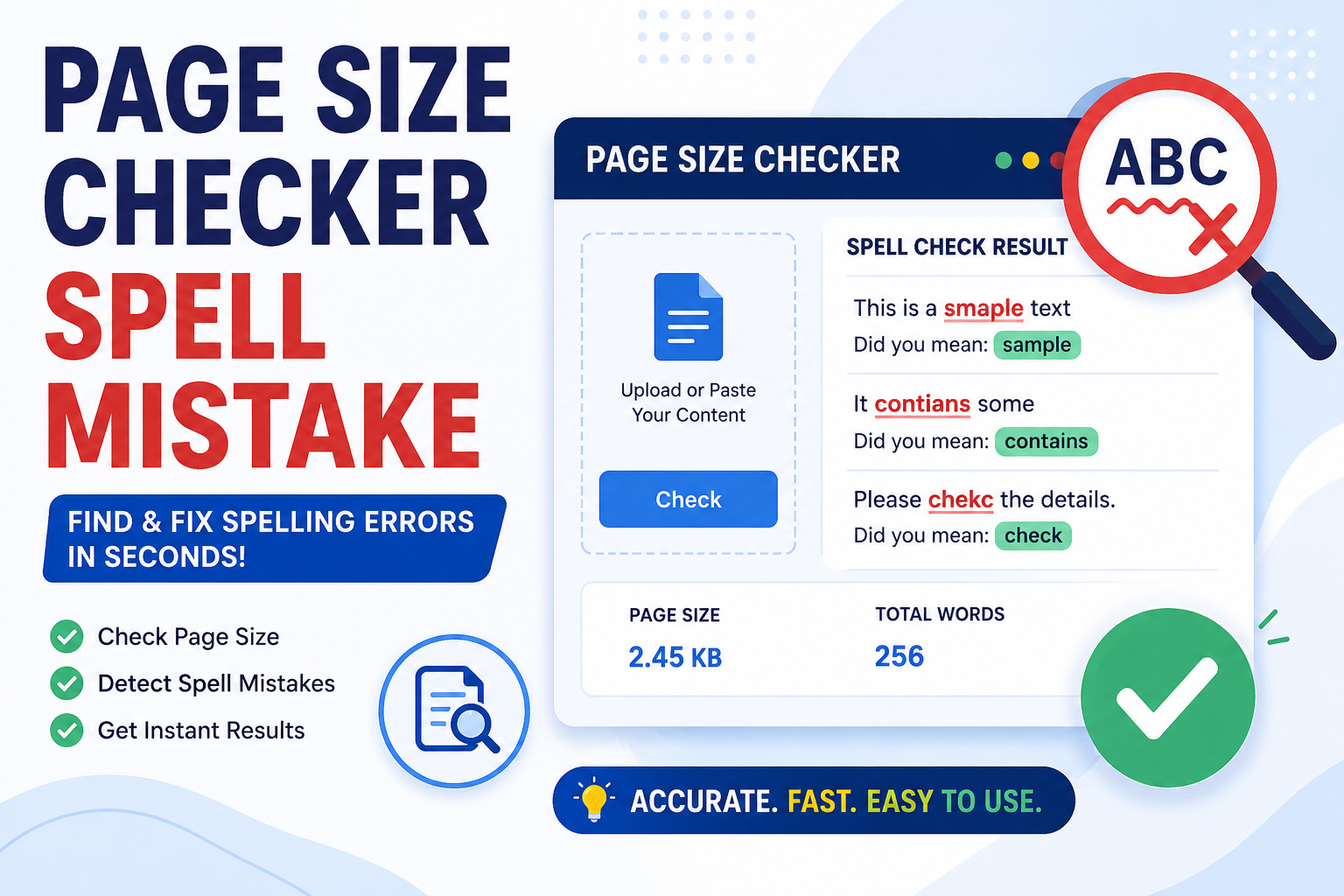
Have you ever typed something into a search bar and felt frustrated when nothing useful came up? Many people face this problem when they look for a page size checker. They make a small spell mistake that stops them from finding the right tool. This guide will help you fix that issue in a simple way. You will learn what a page size checker does, why spelling matters, and how to use these tools to make your website better. Best of all, everything here uses easy words so you can follow along step by step.
A page size checker helps you see how big your web pages are. This size includes pictures, words, and other files that load when someone visits your site. If the page is too heavy, it takes longer to open. People get impatient and leave. That is why fixing a page size checker spell mistake is important. Once you spell it right, you can find good tools and improve your website fast. In 2026, fast websites rank better in search results, so this knowledge gives you a real advantage.
Why Spelling Mistakes Happen with Page Size Checker
Spelling mistakes are common because the words sound similar when you say them quickly. Someone might type “page size cheker” or “page size chequer” instead of the correct “page size checker.” These small changes make search engines show wrong results. After that, people waste time and feel stuck.
This happens for many reasons. First, English spelling can be tricky. Also, when you are in a hurry, your fingers press the wrong keys. In addition, autocorrect on phones sometimes changes words without asking. That’s why a page size checker spell mistake feels so normal. Over time, these tiny errors add up and keep you from learning useful information about your website.
Think of it like this. Imagine you want to bake a cake but write “flour” as “flower.” You end up with petals instead of powder. The same thing occurs with tools. A wrong spelling leads you to the wrong place. Fixing the spell mistake opens the door to better websites.
How to Fix the Page Size Checker Spell Mistake Quickly
Fixing the issue is easier than you think. Start by remembering the correct words: page size checker. Write them as three separate words. Next, practice typing them slowly a few times. This simple habit stops future mistakes.
After that, use a good search engine and type the full correct phrase. You will see helpful tools appear right away. Another thing is to bookmark the useful pages so you do not have to search again. In addition, you can write the correct spelling on a small note near your computer. That way, it stays fresh in your mind.
For example, suppose you run a small online shop. You notice your pages load slowly. Because of a spell mistake, you could not find help before. Once you fix the spelling, you discover how to check page sizes. This small change makes your shop faster and happier for customers.
What Does a Page Size Checker Actually Do?
A page size checker looks at everything on your web page and tells you the total weight in kilobytes or megabytes. It shows which parts are heavy, like big pictures or extra code. This information helps you make smart choices.
Because websites work better when they are light, the checker becomes your friend. For instance, it might tell you one picture is very large. After that, you can make the picture smaller without losing quality. Next, you check the page again and see the improvement. Over time, these steps create faster sites that people enjoy using.
Another helpful part is learning about load time. Heavy pages take more seconds to open. That’s why checking size regularly keeps your site healthy, just like eating good food keeps your body strong.
Simple Steps to Use a Page Size Checker Tool
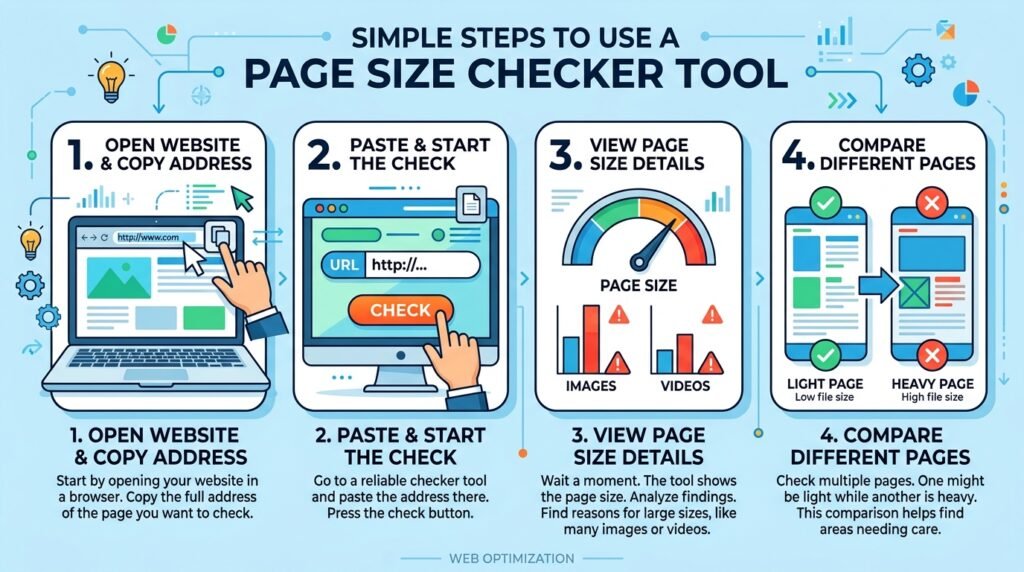
Using these tools follows a clear path. First, open your website in a browser. Then, copy the full address of the page you want to check. Next, go to a reliable checker tool and paste the address there.
After you press the check button, wait a short moment. The tool will show you the page size and other details. Look at the numbers carefully. If the size is too big, find the main reasons. For example, large images or many videos often cause the problem.
In addition, try checking different pages on your site. One page might be light while another feels heavy. This comparison helps you understand which areas need extra care. Over time, you will get faster at spotting issues before visitors notice them.
Common Problems a Page Size Checker Reveals
Many websites have hidden weight that slows them down. One big problem is unoptimized pictures. These files stay large even when they do not need to be. Another common issue is extra code that no one sees but still loads.
Because of these problems, visitors wait longer. That’s why the checker is useful. It points out the heavy parts so you can fix them. For example, you might learn that one script file is not necessary. Removing or delaying it makes the page feel quicker.
In addition, old files sometimes stay on the server and add size without helping. Checking regularly helps you clean these up. As a result, your website feels fresh and light for everyone.
Easy Ways to Reduce Page Size After Checking
Once the checker shows the size, you can take simple actions. Start with pictures. Save them in the right format and make them smaller if needed. Next, combine small files when possible. This step reduces the number of requests the browser makes.
Another thing is to turn on compression. It squeezes files so they travel faster across the internet. Also, use caching so returning visitors do not download everything again. These changes work together smoothly.
For real-life example, think of a family photo album. If every picture is huge, the album takes forever to open. But if you choose smaller, clear versions, everyone enjoys it right away. Your website works the same way. Small improvements bring big smiles from users.
Why Page Size Matters for Your Website in 2026

Today, people expect websites to open almost instantly. If yours is slow, they click away and visit somewhere else. A page size checker helps you stay ahead of this problem.
Search engines also notice fast sites. They give them better positions because happy visitors stay longer. In addition, mobile users with slower connections benefit the most from light pages. That’s why checking size is a kind thing to do for your audience.
Over time, keeping pages light builds trust. Visitors return because they know your site works well. This steady improvement grows your online presence naturally.
Mistakes to Avoid When Using Page Size Checkers
Even with good tools, some mistakes happen. One is checking only the home page and forgetting other important pages. Always test several pages to get the full picture.
Another error is ignoring the suggestions the tool gives. The numbers tell a story, so read them carefully. Also, do not make every picture tiny. Balance quality and size so your site still looks nice.
In addition, skipping regular checks lets problems grow. Set a simple reminder every month. This habit keeps your site in top shape without much effort.
Tips for Beginners to Master Page Size Checking
If you are new, start small. Pick one page and check it first. Write down what you learn. Next time, try fixing one thing and check again. You will see progress quickly.
Also, learn basic terms like “kilobytes” and “compression.” These words are not hard once you use them a few times. For example, think of compression like packing a suitcase neatly instead of stuffing it full.
Another helpful tip is to ask friends or family to test your site on their phones. Their feedback shows real user experience. Combine this with the checker results for the best outcomes.
FAQ
What is the correct spelling for page size checker?
The right way is three separate words: page size checker. Avoid extra letters or combined words that create a spell mistake.
How often should I check my page size?
Check important pages every month or after big updates. This keeps your site fast and friendly.
Can a page size checker fix spelling errors on my site?
No, it focuses on file size and speed. Use a separate spell checker for words and grammar.
Why does my page size feel too big even after changes?
Sometimes hidden files or third-party scripts add weight. Check everything step by step to find them.
Is page size important for small websites too?
Yes. Even small sites benefit from fast loading. Visitors appreciate quick experiences everywhere.
What if I still make the spell mistake when searching?
Try typing slowly or use the correct phrase in your notes. Practice makes it easy over time.
Does reducing page size affect how my site looks?
Not if you do it carefully. Good tools keep quality high while making files lighter.
Conclusion
Understanding and fixing the page size checker spell mistake opens many doors. You learn to measure page weight, spot heavy parts, and make simple improvements that help visitors. Each step builds a better, faster website that people enjoy.
Remember, small changes like correct spelling and lighter pages create big results over time. Stay curious, check regularly, and watch your site grow stronger. Keep learning, and your online work will feel easier and more successful every day.
Disclaimer: This article is for general information and educational purposes only. The content does not constitute professional advice. Always verify information with reliable sources for your specific situation. Results may vary based on individual website setups and tools used. We do not guarantee any specific outcomes from following these steps.
Explore More:
Woodforest App: Features, Login Guide & Mobile Banking Benefits
Wonder Weeks App: Complete Guide to Baby Development Leaps
About the Author