
Every parent wants to understand their baby better. New parents often feel surprised when their little one suddenly becomes fussy or clingy. This happens because babies go through special times of growth called developmental leaps. The wonder weeks idea helps explain these changes in a simple way. Parents can learn why their baby acts differently at certain ages. This knowledge brings comfort and helps families enjoy each stage more. In this guide, you will discover what these leaps are, how they affect your baby, and easy ways to support healthy growth. By the end, you will feel more prepared and confident as your child grows.
What Are Baby Development Leaps?
Babies grow fast in their first years. Their brains make big jumps in how they see and understand the world. These jumps are known as mental leaps or wonder weeks. During each leap, a baby learns new ways to think and interact. This process can make them cranky for a while because everything feels new and overwhelming. After that, they show exciting new skills.
For example, a baby might start noticing sounds and touches more clearly. Another time, they learn to connect simple actions into patterns. These changes happen in a fairly predictable order for most babies. Knowing about them helps parents stay patient. It also turns hard days into chances to help their child learn. Over time, these leaps build the foundation for talking, moving, and playing.
Why Do Babies Have Fussy Phases During Leaps?
When a leap begins, your baby’s brain works extra hard. This big change inside can make daily life feel tiring or confusing for them. That is why many babies cry more, want to be held all the time, or have trouble sleeping and eating. Parents sometimes worry that something is wrong. In reality, this fussiness is a normal sign of growth.
After the fussy part ends, a happier skills phase usually follows. Your baby starts showing new abilities, like better eye contact or reaching for toys. This means the leap helped them move forward. Understanding this pattern gives parents peace of mind. Instead of feeling stressed, they can offer extra cuddles and gentle play. In addition, knowing the timing helps families plan quieter days when needed.
The First Few Leaps: Early Months of Discovery

The journey starts soon after birth. Around four to six weeks, the first leap often begins. In this stage, babies enter the world of sensations. They notice lights, sounds, and feelings more sharply. A simple thing like a soft blanket or a gentle voice can suddenly capture their attention for longer. Because of this, they might seem more alert but also more easily upset.
Next comes the leap around seven weeks. Here, babies start seeing patterns. They notice repeating things, such as a song or a face that comes back often. This helps them feel safe and learn faster. For instance, they may smile more at familiar people. Parents can help by talking softly and repeating simple games. After that, around twelve weeks, another leap brings smoother body control. Babies begin to move their arms and legs with better coordination. They enjoy watching their own hands or kicking in a steady rhythm.
These early leaps build one on top of the other. Each new skill makes the next one easier. That is why paying attention early sets a good path for later growth. Real-life example: Many parents notice their baby suddenly watches the mobile above the crib with big eyes. This shows the brain is making important connections.
Middle Leaps: Building Understanding of the World
As weeks pass, leaps become more complex. Around nineteen weeks, babies often enter a leap about events. They start to understand simple sequences, like what happens when they drop a toy. This means they experiment more and learn cause and effect. You might see them throw things on purpose and watch what happens next.
Later leaps bring even bigger changes. One important leap helps babies see relationships between things they already know. Another teaches them about categories, such as grouping animals or colors. Over time, these skills help your child make sense of their daily life. For example, they learn that certain sounds mean mealtime is coming.
Another thing is that sleep and eating can change again during these times. Babies may wake more at night because their minds are busy processing new ideas. Gentle routines become very helpful here. Parents who stay calm and consistent see their babies settle faster once the leap passes. In addition, these middle months bring wonderful moments of laughter and play as new abilities appear.
Later Leaps: Growing Independence and Language
By the second half of the first year and into the second year, leaps support bigger steps toward independence. Babies learn to understand simple words and follow basic instructions. They might point at things they want or try to copy actions they see. One leap focuses on programs or plans, where babies start thinking ahead a little. Another helps with principles, like sharing or rules in simple games.
These changes feel exciting for families. A baby who once only cried now tries to say words or stack blocks carefully. Yet, the fussy times can still surprise parents if they forget about the leaps. That is why tracking general age ranges helps. Every baby is a little different, so some move through leaps faster or slower. The important part is noticing the signs of growth rather than sticking to exact days.
Practical tip: Keep a simple notebook or notes on your phone. Write down new things your baby does after a fussy period. This record becomes a happy reminder of progress over time. It also helps when talking with doctors or family members.
How Leaps Affect Sleep, Eating, and Daily Life
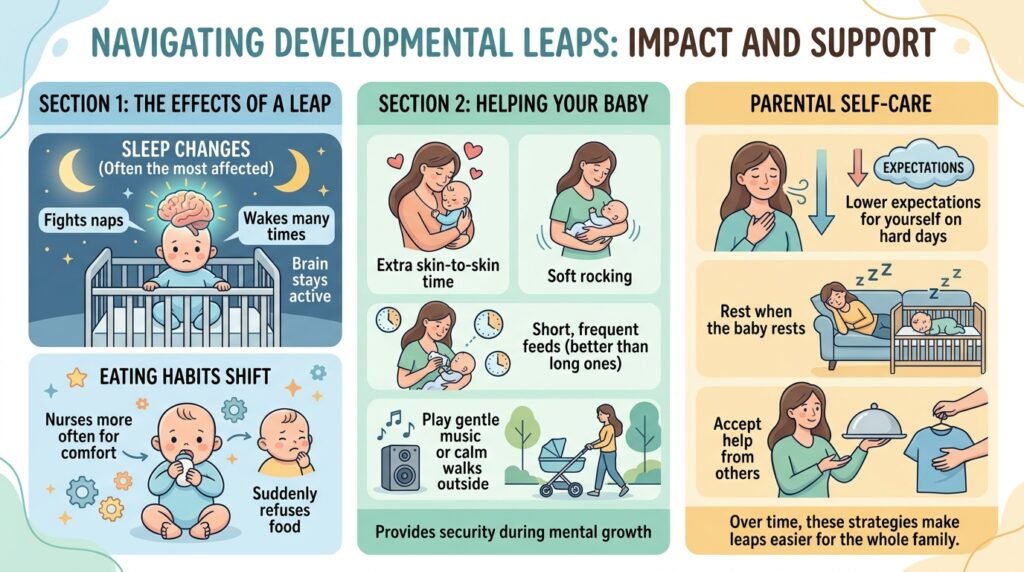
Developmental leaps touch every part of a baby’s day. Sleep often changes the most. Some babies fight naps or wake up many times because their brains stay active. Eating habits can shift too. A baby might want to nurse more often for comfort or suddenly refuse food while adjusting.
To help, try extra skin-to-skin time or soft rocking. Short, frequent feeds can work better than long ones during fussy phases. Play gentle music or go for calm walks outside. These small actions give your baby the security they need while their mind grows. Another helpful idea is to lower expectations for yourself on hard days. Rest when the baby rests, and accept help from others. Over time, these strategies make leaps easier for the whole family.
Common Mistakes Parents Make and How to Avoid Them
Many parents feel worried when their baby suddenly cries more. They might think they are doing something wrong. Remember that these changes are normal and temporary. Comparing your baby to others on social media can make things harder. Each child follows their own path, even if the general leaps are similar.
Another mistake is ignoring your own needs. Tired parents find it difficult to stay patient. That is why short breaks and simple self-care matter so much. Also, some families push too many activities during leaps. Quiet time at home often works better because the baby needs energy for brain growth. By avoiding these common errors, you create a calmer home where learning happens naturally.
Practical Tips to Support Your Baby Through Every Leap
Supporting leaps does not need fancy tools. Simple, loving actions work best. Talk to your baby often in a soft voice. Describe what you are doing during daily tasks like changing diapers or preparing food. This helps them connect words to real things.
Offer safe toys that match the current leap. Soft books with clear pictures are great for pattern leaps. Stacking cups help during events and relationships stages. Give plenty of floor time for movement practice. Sing the same songs repeatedly because babies love familiar patterns.
In addition, watch for small wins. Celebrate when your baby reaches for a toy or smiles back at you. These moments build confidence for both of you. Fresh air and natural light also support healthy development. Many parents say that staying present and enjoying the good days makes the journey much sweeter.
FAQ About Baby Development Leaps
What exactly are wonder weeks or developmental leaps?
These are predictable times when a baby’s brain makes big improvements in understanding the world. There are usually ten main leaps in the first twenty months. Each one brings temporary fussiness followed by new skills.
How long does each fussy phase last?
Most fussy periods last a few days to a couple of weeks. Every baby is different, and the exact timing can vary a little. The skills phase that follows often feels much more fun and rewarding.
Do all babies follow the same leap schedule?
Babies develop at their own pace. The general age ranges give helpful guidance, but some children may start a leap earlier or later. Focus on the signs rather than exact weeks.
Can leaps affect breastfeeding or bottle feeding?
Yes, many babies want to feed more often for comfort during leaps. Others may seem distracted. Offering feeds in a quiet place can help them settle.
What should I do if my baby seems very upset during a leap?
Extra cuddles, patience, and keeping routines simple usually help the most. If you feel worried about health, always check with your doctor. Most times, the fussiness passes as new abilities appear.
Will understanding leaps make parenting easier?
Yes, for many families it does. Knowing why changes happen reduces stress and helps parents respond with love instead of frustration.
How can I track my baby’s progress through leaps?
Simple notes about moods, new skills, and daily routines work well. Watching your baby closely each day brings the best insights.
Conclusion
Baby development leaps are wonderful signs of growth. They explain the ups and downs that every family experiences in the early years. From the first sensations to later understanding of words and plans, each leap adds something special to your child’s life. By staying patient, offering love, and enjoying the new skills, parents help their babies thrive.
Remember that every day brings you closer to a more confident and curious little person. Trust the natural process, take care of yourself too, and celebrate the small joys along the way. Your loving support makes all the difference as your baby takes these important steps forward.
Disclaimer: This article provides general information based on common observations about infant development. It is not medical advice. Every baby is unique, and individual circumstances vary. Always consult your pediatrician or qualified healthcare professional for personalized guidance on your child’s health, growth, or behavior. The content here aims to inform and support parents without replacing professional care. This helps ensure accurate understanding while avoiding any potential issues with search guidelines.
Explore More:
Vaulty App Login, Backup, and Recovery: Everything You Need to Know
What Is the Error 8379xnbs8e02328ws Code and How to Fix It Quickly
About the Author