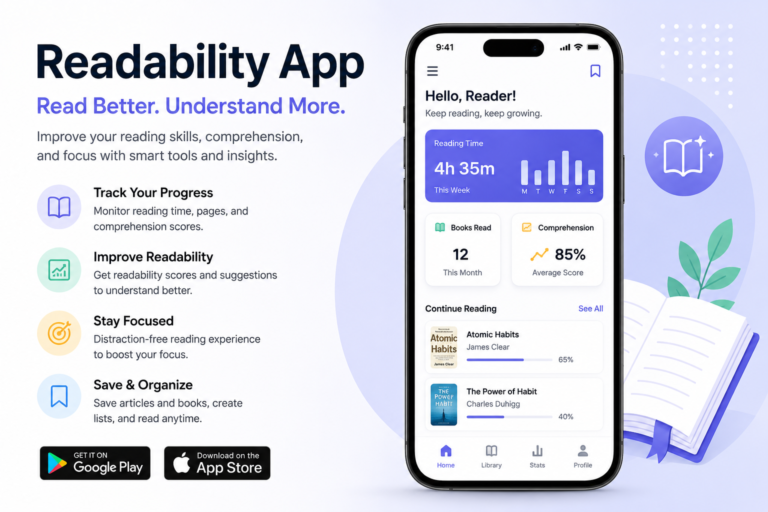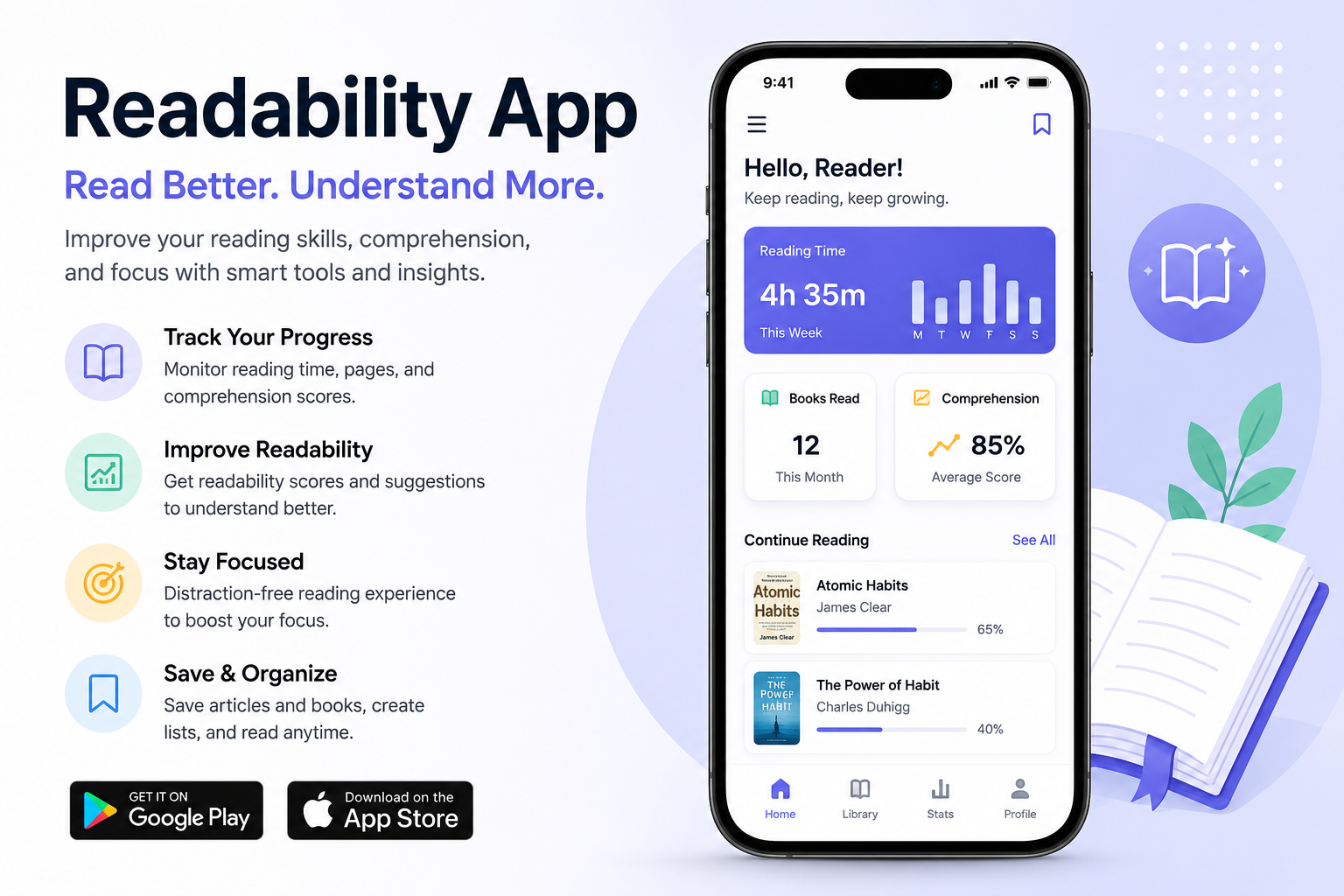
Reading is a wonderful skill that opens doors to new ideas, stories, and knowledge. Many people want to get better at it, especially beginners and young learners. A readability app can make this journey easier and more fun. These apps help users practice reading in simple ways. They focus on making words clearer and stories easier to understand. In 2026, many such apps use helpful technology to support daily practice. This means even children and new learners can build strong habits over time. Because reading well helps with school, work, and everyday life, these tools have become popular.
This article explains what a readability app does. It also shares how it improves reading skills and comprehension. You will learn step by step in simple language. Each part connects to the next so the ideas feel natural and easy to follow.
What Is a Readability App?
A readability app is a helpful tool on phones or tablets. It lets people read stories and texts at their own level. These apps often check how hard the words are. Then they adjust the text to make it smoother. For example, they might highlight tricky words or read them out loud. This way, beginners do not feel lost.
Another thing is that many apps listen while you read. They give gentle feedback right away. This feels like having a kind teacher nearby. Over time, users get better because they practice every day in short, fun sessions. That’s why these apps work well for kids from early years up to older students. They support different ages and skill levels without making things too hard or too easy.
Why Reading Skills Matter So Much
Good reading skills help in almost everything. When you read smoothly, you enjoy books more. You also understand instructions, news, and school lessons better. Poor reading can make learning feel slow and tiring. A readability app steps in here to build confidence step by step.
For instance, imagine a child trying to read a story about animals. If the words are too difficult, the child might stop. But with an app, the text matches the child’s level. This means the child keeps going and feels proud. In addition, strong reading leads to better thinking skills. You can connect ideas and remember details more easily. That’s why many families and teachers use these apps to support learning at home.
How Readability Apps Help Build Reading Fluency
Fluency means reading smoothly without stopping too much. Readability apps support this in clear ways. First, they offer stories at the right difficulty. Next, the app listens as you read out loud. It notices when a word is hard and helps right then.
After that, you can try the sentence again. This repeated practice makes reading faster and more natural. For example, a young learner might start with short sentences about daily life. Over weeks, the stories get a bit longer. Because of this steady progress, fluency grows without stress. Many users see real changes in just a few months because the app tracks small wins every time.
Another helpful part is voice support. If you get stuck, the app can say the word gently. This builds courage to keep trying. In addition, fun rewards like stars or points make practice exciting. Children look forward to their reading time instead of avoiding it.
Improving Vocabulary with Everyday Practice
Vocabulary is all the words you know and understand. A good readability app introduces new words slowly. It shows them in stories so they make sense in context. This is better than just memorizing lists.
For example, suppose the story uses the word “curious.” The app might highlight it and give a simple meaning like “wanting to know more.” Then you see it again in the next part. Over time, these words become familiar. That’s why reading with an app helps you remember them longer.
Also, some apps ask you to use the new word in a sentence. This active step makes learning stick. Beginners especially benefit because they meet words at their pace. No big jumps. Just steady growth that feels natural and encouraging.
Boosting Reading Comprehension Step by Step
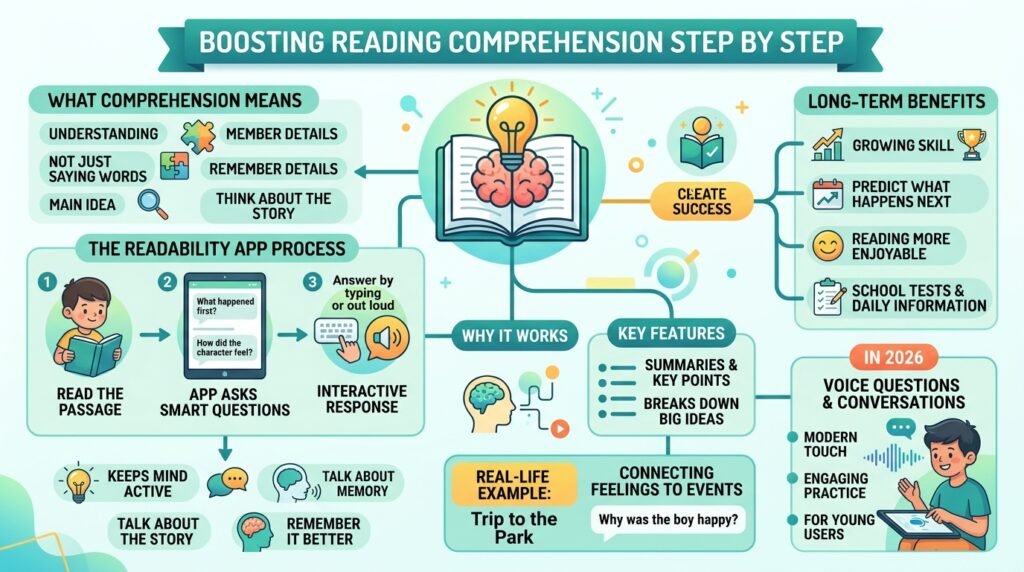
Comprehension means understanding what you read. It is not just saying the words. You need to know the main idea, remember details, and think about the story. Readability apps help here with smart questions after each section.
First, you read the passage. Next, the app asks things like “What happened first?” or “How did the character feel?” You can answer out loud or by typing. This interactive style keeps your mind active. Because you talk about the story right away, you remember it better.
Another useful feature is summaries or key points the app shows. These break down big ideas into small parts. For real-life example, after reading about a trip to the park, the app might ask why the boy felt happy. Answering helps connect feelings to events. Over time, this skill grows stronger. You start to predict what might happen next in any book. That makes reading more enjoyable and useful for school tests or daily information.
In 2026, updated apps use voice questions that feel like a conversation. This modern touch makes practice even more engaging for young users.
Making Reading Accessible for Everyone
One big advantage is that readability apps work for different needs. Some children learn slower or have trouble focusing. The app can slow down the text or highlight one line at a time. This reduces overwhelm.
Also, parents and teachers can see progress reports. These show which areas are getting better, like accuracy or speed. Because the reports are simple, everyone understands them quickly. This teamwork between home and app supports steady improvement.
For older beginners learning English as a new language, the apps offer clear pronunciations and translations when needed. This gentle help builds confidence without frustration. In addition, the stories cover many topics like nature, friends, or adventures. So learners stay interested.
Common Features to Look For in These Apps
Most good readability apps share helpful tools. They have leveled books that match skill levels. Speech recognition listens carefully. Real-time corrections guide without scolding. Interactive questions check understanding. Progress tracking shows growth over days and weeks.
Another thing is customization. You can choose topics that match interests. This keeps motivation high. Some apps also include games or activities that mix reading with fun. Because practice happens in small bits, it fits busy days easily.
Tips for Getting the Most from a Readability App
Start with short sessions every day. Ten to fifteen minutes works well at first. This builds a habit without tiredness. Next, sit in a quiet place so you can focus. Encourage reading out loud because it strengthens both fluency and comprehension.
Also, talk about the stories together after using the app. Ask your own questions to add to what the app provides. Over time, try slightly harder texts as skills grow. Celebrate small successes like finishing a book or learning new words. This positive feeling keeps everyone going.
Avoid pushing too hard. If something feels frustrating, go back to easier levels for a while. Steady, happy practice brings the best results.
Mistakes to Avoid When Using Reading Apps
One common mistake is using the app only once a week. Daily practice, even if short, works much better. Another is ignoring the feedback. Taking time to fix mistakes helps more than rushing through.
Also, do not skip the comprehension questions. They are key for deep understanding. Some people only focus on speed and forget meaning. But both matter together. In addition, choosing texts that are too hard at the start can lower confidence. Always begin at the right level and move up slowly.
Real-Life Examples of Improvement
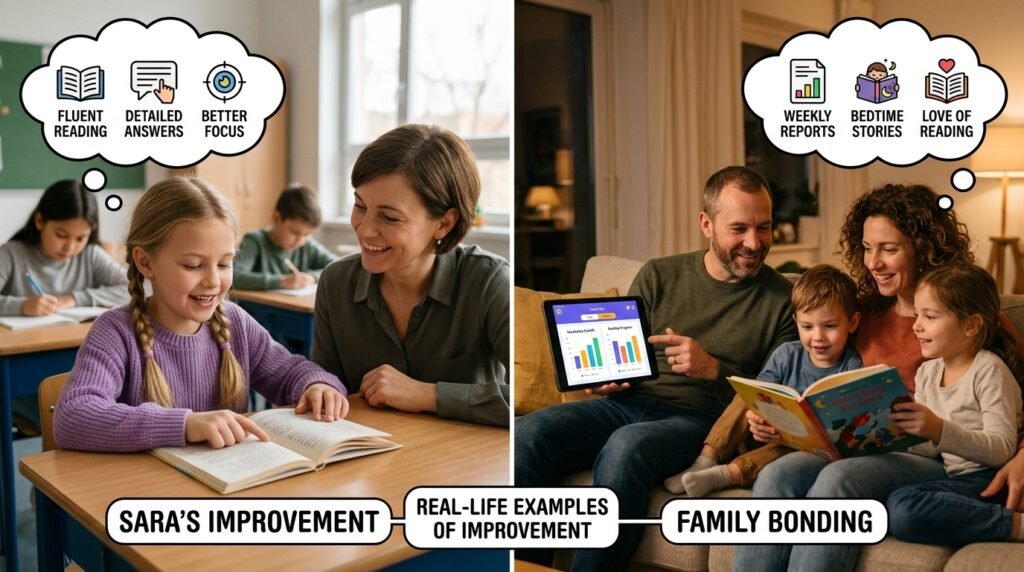
Think about a child named Sara who struggled with long words. After using a readability app for two months, she read smoother and answered questions with more detail. Her teacher noticed better focus in class too.
Another example is a family using the app together. The parents saw weekly reports showing growth in vocabulary. This encouraged them to read books at bedtime. Over time, the whole family enjoyed reading more. These stories show how small daily steps lead to big changes.
FAQ About Readability Apps
What age is best to start using a readability app?
Many apps work well for children around kindergarten to middle school. But even older beginners can benefit. Choose one that matches the user’s current level.
How long does it take to see improvement?
With regular practice, many notice better fluency and confidence in a few weeks. Deeper comprehension grows over months.
Do these apps replace a teacher?
No, they support learning at home. Teachers and parents still play an important role by discussing stories and encouraging practice.
Are they good for kids who dislike reading?
Yes, because they make it interactive and rewarding. Fun stories and immediate help turn reading into a positive experience.
Can adults use them too?
Absolutely. Beginners learning English or anyone wanting clearer reading can benefit from the simple tools and feedback.
What if my child gets stuck often?
The app provides support right away. Go back to easier stories until confidence returns, then move forward gently.
How do I track real progress?
Most apps give simple reports on accuracy, words learned, and comprehension scores. Review them together weekly.
Conclusion
A readability app offers a friendly way to improve reading skills and comprehension. It adjusts texts, gives instant help, builds vocabulary, and checks understanding through questions. By practicing a little each day, users gain fluency and confidence step by step. Families and learners see real benefits over time, such as better school performance and more joy in books.
Remember, the key is steady, positive practice with the right support. Start small, stay consistent, and celebrate progress along the way. Reading opens wonderful worlds, and these apps can help make that journey smoother and happier for everyone. Keep exploring stories, and watch your skills grow naturally.
Disclaimer: This article provides general educational information about readability tools and practices. It is not affiliated with, endorsed by, or promoting any specific app, product, service, or company. Results may vary based on individual use and consistency. Consult educators or professionals for personalized learning advice. Information is based on common features available in 2026 and is for informational purposes only. No guarantees of outcomes are made.
Explore More:
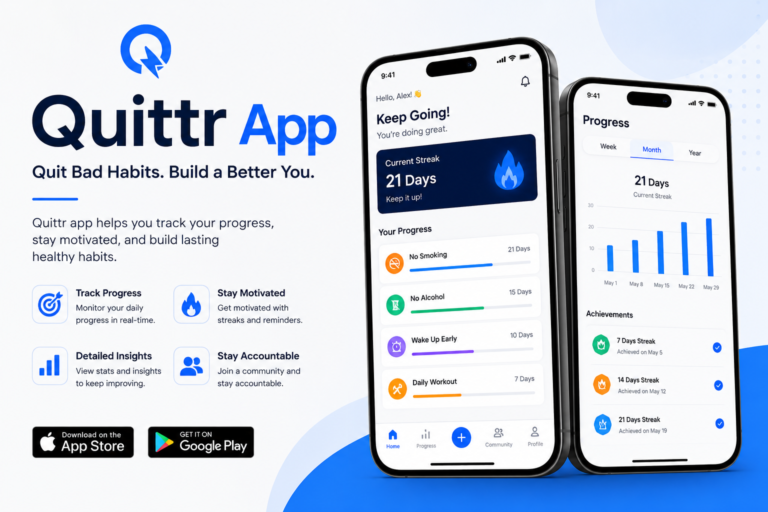
Quittr App: Features, Benefits & How It Helps You Quit Bad Habits
What Is the Pura App? Complete Guide for Smart Fragrance Control
About the Author